CATEGORIES
TAGS
How podcast listeners shop: 70% buy from endorsements

Podcasts have quietly become one of the most powerful shopping channels in 2026. 70% of podcast listeners have purchased products they heard about on shows, driven by authentic creator endorsements and episodic storytelling. This guide reveals how trending products emerge from health, lifestyle, and technology podcasts, and how you can identify genuine recommendations worth your attention.
Table of Contents
- Why Podcasts Uniquely Influence Shopping Behavior
- Data-Backed Trends In Podcast-Driven Product Categories
- Role Of Creator Trust And Authenticity In Influencing Purchases
- Common Misconceptions About Podcast Product Endorsements
- How Ai And Analytics Platforms Transform Podcast-Driven Shopping Insights
- Practical Tips For Listeners To Discover And Evaluate Podcast-Recommended Products
- Discover Trending Podcast Products Effortlessly With Prodcast
- How Podcast Listeners Shop: Common Questions
Key takeaways
| Point | Details |
|---|---|
| Trust drives purchases | Podcast listeners show high trust in authentic product mentions, leading to 70% purchase rates. |
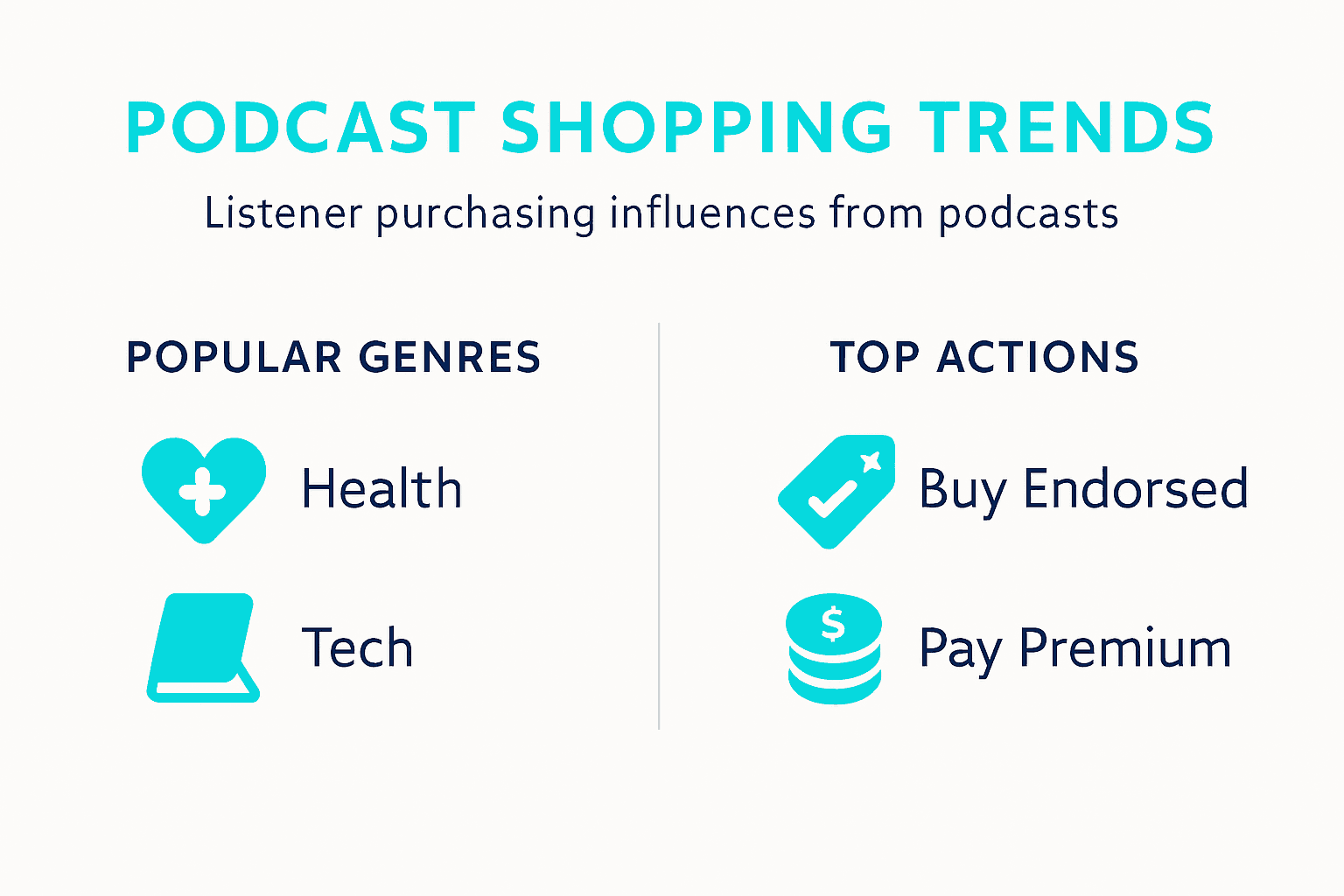
| Top genres matter | Health, lifestyle, and technology podcasts drive the most product discovery and sales. |
| AI tracks trends | AI analytics improve real-time tracking of trending podcast product endorsements. |
| Organic wins | Majority of endorsements are organic, not paid ads. |
| Premium appeal | Listeners favor expert-host recommendations and willingly pay premium prices. |
Why podcasts uniquely influence shopping behavior
Podcasts create shopping influence unlike any other media. The host-listener relationship builds trust bonds that surpass traditional advertisements by 74%, making product mentions feel like advice from a knowledgeable friend. You’re not being sold to; you’re being guided.
Episodic storytelling amplifies this effect. When hosts weave product mentions into ongoing narratives, recall increases by 40% compared to one-off ads. You hear about the same productivity app across three episodes, each time in a different context. By the third mention, you’re already convinced.
Repetition reinforces purchase intent naturally. Unlike banner ads you scroll past, podcast mentions reach you during commutes, workouts, or household tasks. You’re engaged, often on mobile, ready to act. This real-time shopping relevance converts curiosity into purchases faster than any other channel.
The intimacy of audio creates perceived authenticity. Hosts share personal experiences, failures, and genuine enthusiasm. When a tech podcaster describes how a VPN saved their data during travel, it resonates deeper than any scripted commercial ever could.
Pro Tip: Track products mentioned repeatedly across multiple episodes. Recurring mentions signal genuine host satisfaction rather than one-time sponsorship deals.
Key factors driving podcast listener purchase behavior include:
- Host credibility and expertise in their niche
- Story-driven product integration within episode narratives
- Mobile-first listening environments enabling instant purchase actions
- Parasocial relationships that mirror friend recommendations
Data-backed trends in podcast-driven product categories
Health podcasts dominate product-driven shopping. Listeners purchase supplements and fitness products 45% of the time they hear about them, far exceeding other categories. Hosts with nutrition credentials or personal transformation stories drive this behavior. You trust their journey, so you trust their stack.
Technology shows follow closely. AI tools capture 35% of purchases, productivity gadgets 28%, and cybersecurity services 21%. Tech-savvy audiences actively seek cutting-edge solutions, and podcasters provide curated recommendations that cut through marketing noise.

Lifestyle podcasts unlock premium spending. 60% of listeners willingly pay more for host-endorsed items in fashion, home goods, and personal development. The aspirational nature of lifestyle content positions products as investments in self-improvement rather than mere purchases.
| Category | Purchase Rate | Top Products |
|---|---|---|
| Health | 45% | Supplements, fitness equipment, meal services |
| Technology | 35% | AI tools, productivity apps, gadgets |
| Lifestyle | 38% | Premium fashion, home decor, courses |
| Business | 32% | Software tools, books, coaching services |
Genre-specific podcast product category trends reveal distinct listener behaviors:
- Health listeners prioritize evidence-based products with scientific backing
- Tech audiences favor early adoption of emerging tools and platforms
- Lifestyle fans seek aesthetic appeal and brand storytelling
- Business podcast followers invest in efficiency and skill development
Role of creator trust and authenticity in influencing purchases
Expertise transforms endorsements into sales. Tech podcasters with credentials double conversion rates compared to non-expert hosts. When a certified nutritionist recommends a supplement brand, you believe the science. When a software engineer breaks down why they switched project management tools, you understand the technical reasoning.
Authenticity perception hinges on organic mentions. Over 60% of product discussions arise naturally from host experiences rather than paid partnerships. You can hear the difference: genuine excitement versus scripted talking points. This authenticity drives the 74% trust advantage podcasters hold over traditional advertising.
Premium pricing becomes acceptable under trusted guidance. 60% of listeners pay more for products when recommended by credible hosts. You’re not just buying a product; you’re buying into the host’s vetted expertise. This willingness to invest reflects deep confidence in podcaster trust and authenticity.
Pro Tip: Research podcaster backgrounds before major purchases. Check their credentials, professional experience, and whether they’ve used the product long-term versus just discovering it.
Trust indicators that boost purchase confidence:
- Professional certifications or industry experience
- Long-term product usage documented across episodes
- Balanced discussions including product limitations
- Transparent disclosure of partnerships versus organic mentions
Common misconceptions about podcast product endorsements
Myth: All endorsements are paid advertisements. Reality: Over 60% of product mentions arise organically from genuine host experiences. Hosts share tools they actually use, books that changed their thinking, and services that solved real problems. The majority of shopping influence happens without sponsor contracts.
Myth: Listeners avoid expensive products. Reality: 60% willingly pay premium prices for trusted recommendations. Podcast audiences skew educated and financially stable. They value quality over bargains, especially when an expert validates the investment. A $200 productivity tool recommended by a time management coach sells better than a $20 alternative.
Myth: Podcast shopping influence is superficial. Reality: Impact runs deepest for niche, higher-cost items in technology and lifestyle categories. You don’t need podcast validation to buy toothpaste, but you absolutely seek it before investing in a $1,500 standing desk or annual software subscription. These considered purchases benefit most from detailed, authentic host experiences.
Debunking podcast endorsement misconceptions reveals nuanced listener behavior:
- Sponsored content still converts when hosts maintain authenticity
- Price sensitivity decreases with product complexity and host expertise
- Repeat purchases occur more frequently than one-time impulse buys
- Listener skepticism focuses on inauthentic delivery, not sponsorship itself
How AI and analytics platforms transform podcast-driven shopping insights
AI transcription converts spoken content into searchable shopping data. Platforms analyze thousands of podcast episodes simultaneously, extracting every product mention, brand discussion, and service recommendation. What once required manual listening now happens instantly, revealing real-time trending product patterns across industries.
Analytics spotlight emerging trends before they go mainstream. When mentions of a specific AI writing tool surge 300% across tech podcasts in one week, you’re seeing early adoption signals. Marketers gain competitive intelligence; listeners discover innovations before crowded markets drive up prices or dilute quality.
Targeting efficiency improves dramatically. Marketing campaigns using podcast analytics data achieve 30% better conversions by reaching audiences already primed by organic host discussions. You’re not interrupting; you’re amplifying existing interest.
| Approach | Discovery Speed | Trend Accuracy | Conversion Rate |
|---|---|---|---|
| Traditional | 2-4 weeks | 65% | Baseline |
| AI-driven | Real-time | 88% | +30% |
AI-powered podcast AI shopping insights deliver multiple advantages:
- Instant alerts when products gain mention momentum
- Category analysis revealing which genres drive specific product types
- Sentiment tracking distinguishing enthusiastic endorsements from casual mentions
- Competitive intelligence showing which brands dominate podcast conversations
Practical tips for listeners to discover and evaluate podcast-recommended products
Start by identifying credible expert hosts in your interest areas. Look for professional backgrounds, industry recognition, or demonstrated expertise through consistent, detailed content. A certified financial planner discussing investment apps carries more weight than a general lifestyle host.
Use AI platforms to track trending and frequently mentioned products. Tools like Prodcast aggregate mentions across thousands of shows, revealing which items gain repeated endorsements. When fifteen different productivity podcasters mention the same task management app, you’ve found a validated winner.
Follow these evaluation steps before purchasing:
- Verify the podcaster’s credentials and relevant experience
- Check if the product appears across multiple episodes or shows
- Read independent reviews beyond podcast endorsements
- Compare features and pricing against alternatives
- Ensure the platform offers secure transactions and return policies
Pro Tip: Don’t assume all endorsements are paid advertisements. Focus on organic mentions where hosts share detailed personal experiences rather than scripted benefits. Context and storytelling signal authenticity.
Maximize value from tips for evaluating podcast product recommendations by tracking mention frequency, noting host expertise levels, and prioritizing products discussed in problem-solving contexts rather than list-style sponsor segments.
Discover trending podcast products effortlessly with Prodcast
Tracking authentic product endorsements across thousands of podcasts used to be impossible. Prodcast changes that. Our AI-powered platform analyzes podcast transcripts in real time, identifying which products health experts, tech leaders, and lifestyle creators actually recommend to their audiences.

You gain instant access to trending items before they saturate the market. Explore authentic endorsements from your favorite shows, compare mentions across genres, and make confident purchases backed by creator expertise. Whether you’re hunting for the best supplements discussed on health podcasts or the AI tools dominating tech conversations, Prodcast delivers the insights you need.
Stop second-guessing product recommendations. Start leveraging data-driven podcast product discovery strategies that connect you directly to what engaged listeners are actually buying. Visit Prodcast and transform how you discover products through the podcasts you already love.
How podcast listeners shop: common questions
Are all podcast product recommendations paid ads?
No, over 60% arise organically from genuine host experience. Hosts share products they personally use and believe in, separate from sponsorship arrangements. Authentic mentions typically include detailed usage stories rather than scripted benefit lists.
Which podcast genres are best for discovering trending products?
Lifestyle, health, and technology podcasts lead in product mentions and purchase influence. Health shows drive supplement and fitness equipment sales, tech podcasts surface emerging AI tools and gadgets, while lifestyle content boosts premium fashion and home goods purchases.
How can I trust a podcaster’s product recommendation?
Look for expert hosts with relevant credentials and track repeated product mentions across episodes. Credible recommendations include both benefits and limitations, demonstrate long-term usage, and provide specific use cases rather than vague praise.
Do podcast listeners pay premium prices for recommended products?
Yes, 60% willingly pay more for trusted and endorsed items. Podcast audiences value quality and expertise over bargains, especially for complex purchases in technology, health, and professional development categories where host guidance reduces decision risk.
How can I track trending podcast products efficiently?
Use AI tools like Prodcast that analyze mentions in real time across thousands of shows. These platforms aggregate data, reveal frequency patterns, and highlight which products gain momentum within specific genres, saving you from manual episode searching.