CATEGORIES
TAGS
What Is Podcast Shopping? 29% Plan AI Buying in 2026

Imagine discovering your next skincare routine or AI tool not through endless scrolling but through a natural conversation between trusted podcast hosts. AI is transforming podcasts from entertainment into personalized shopping channels, surfacing products in real time as creators discuss them authentically. Listeners no longer hunt for mentioned items, and marketers tap into spontaneous endorsements backed by data. This article explains how podcast shopping works, its benefits, emerging trends, and practical steps to leverage this discovery revolution.
Table of Contents
- Understanding Podcast Shopping: Definition And Mechanism
- Why Podcast Shopping Works: Listener Engagement And Trust
- Trends In Podcast Shopping: Popular Product Categories And Insights
- Common Misconceptions About Podcast Shopping
- Podcast Shopping Vs Traditional Influencer Marketing: A Comparison
- How Listeners Can Engage With Podcast Shopping Today
- How Marketers Can Leverage Podcast Shopping Data For Brand Growth
- Future Directions: Enhancing Podcast Shopping With Multimedia And AI
- Explore Podcast Shopping With Prodcast Today
- Frequently Asked Questions About Podcast Shopping
Key Takeaways
| Point | Details |
|---|---|
| AI-powered discovery | Podcast shopping uses AI to identify products in podcasts for instant discovery and purchase. |
| Listener benefits | Seamless product discovery from authentic recommendations drives higher engagement and trust. |
| Marketer advantages | Real-time data on trending products and audience sentiment optimizes campaigns and ad spend. |
| Top categories | Health supplements, AI tools, fitness gear, and skincare dominate podcast product mentions. |
| Unique positioning | Differs from influencer marketing with spontaneous mentions, real-time insights, and direct purchase integration. |
Understanding Podcast Shopping: Definition and Mechanism
Podcast shopping represents a fundamental shift in how audiences discover and buy products. Instead of relying on static ads or post-show notes, AI platforms analyze thousands of podcast transcripts in real time to detect product mentions, key moments, and expert recommendations. This transforms spoken conversations into searchable, actionable shopping data.
The mechanism is elegant. AI continuously transcribes podcasts across genres, identifying when hosts mention specific brands, tools, books, or products. Platforms like Prodcast then categorize these mentions by industry, audience size, sentiment, and context. Listeners search for products by name or category and instantly access episodes where creators discuss them authentically.
For listeners, this eliminates the frustration of pausing episodes to scribble notes or hunting through show descriptions. For marketers, it reveals which products are trending, what language resonates, and where to allocate budgets for maximum impact. The ecosystem benefits everyone:
- Authentic discovery: Listeners find products through genuine conversations, not scripted pitches.
- Real-time insights: Marketers access programmatic podcast data-driven discovery showing what audiences hear and care about.
- Direct action: Integrated purchase paths convert interest into sales without friction.
- Precision targeting: AI categorizes mentions by sentiment, genre, and demographics for accurate data-driven marketing strategy for podcast products.
This AI-driven process turns audio content into structured commerce opportunities. Podcast shopping doesn’t interrupt the listening experience. It enhances it by making discovery effortless and personalized.
Why Podcast Shopping Works: Listener Engagement and Trust
Podcast audiences are uniquely engaged. Unlike passive scrolling, listeners actively choose shows, often during focused activities like commuting or exercising. This deep engagement creates fertile ground for product discovery, especially when recommendations feel organic rather than forced.
Trust is the cornerstone of podcast shopping’s effectiveness. Listeners develop parasocial relationships with hosts, viewing them as credible sources rather than advertisers. When a podcaster mentions a productivity app they genuinely use or a supplement that improved their routine, audiences perceive it as peer advice, not a sales pitch. This authenticity drives higher conversion rates compared to traditional ads.
AI-driven tools like Prodcast make acting on these recommendations seamless. Instead of writing down product names and Googling later, listeners instantly access purchase links, reviews, and related episodes. This immediacy capitalizes on shopper intent at its peak.
Several factors amplify podcast shopping’s effectiveness:
- High engagement: US podcast listenership continues growing, with audiences spending hours weekly tuned into trusted voices.
- Organic mentions: Spontaneous product discussions feel authentic, increasing purchase likelihood.
- Simplified discovery: AI in podcasting for engagement eliminates friction between hearing and buying.
- Context matters: Products mentioned during relevant discussions carry more weight than random ads.
Pro Tip: Verify podcaster credibility by checking if they disclose partnerships transparently and listen for multiple mentions over time. Authentic recommendations rarely happen once.
Podcast shopping thrives because it respects the listener relationship. It doesn’t interrupt. It empowers.
Trends in Podcast Shopping: Popular Product Categories and Insights
Analyzing podcast mentions reveals clear consumer interest patterns. Certain product categories dominate discussions, offering marketers strategic insights into where audiences focus their attention and spending.
Health and wellness leads the pack. Supplements, vitamins, and nutrition products appear frequently in health-focused podcasts as hosts share personal routines and interview experts. Fitness equipment and gear trend in active lifestyle shows, with listeners eager to replicate host workouts and recommendations.

Tech podcasts drive AI tool and business productivity software mentions. As AI adoption accelerates in 2026, creators discuss emerging platforms, automation tools, and productivity hacks their audiences can implement immediately. Beauty podcasts consistently surface skincare brands, makeup lines, and wellness products, with hosts detailing routines and reviewing launches.
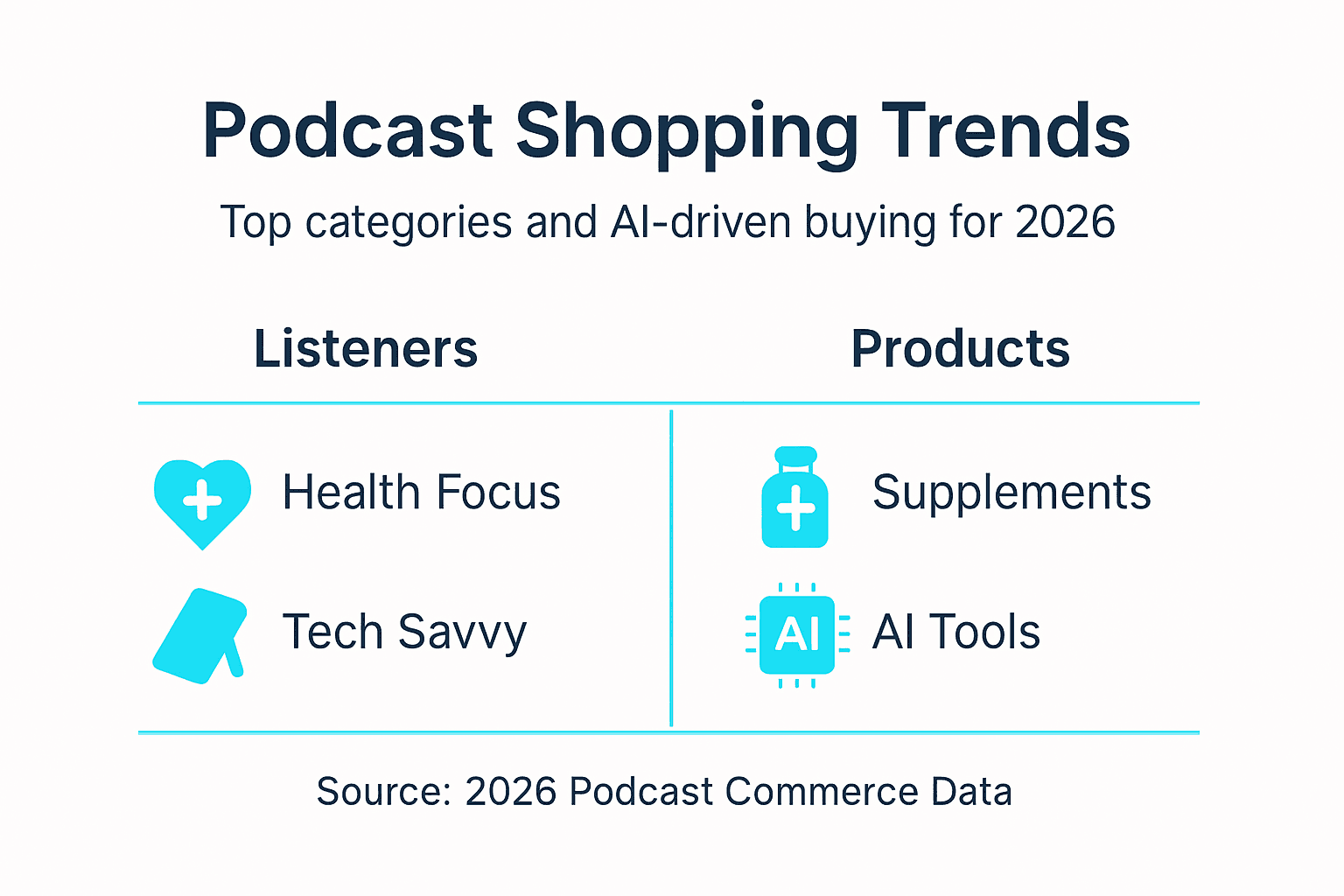
Popular podcast product categories in 2026 reflect evolving consumer priorities:
| Category | Podcast Genre | Listener Interest |
|---|---|---|
| Health supplements | Wellness, nutrition | High engagement, repeat mentions |
| AI tools | Tech, business | Growing rapidly in 2026 |
| Fitness gear | Active lifestyle, sports | Strong conversion intent |
| Skincare brands | Beauty, self-care | Consistent year-round interest |
| Productivity software | Entrepreneurship, remote work | Practical application focus |
Marketers leverage these insights to craft campaigns that align with organic conversations. Rather than interrupting shows with generic ads, brands partner with podcasters already discussing relevant topics. Podcast advert data-driven insights reveal which shows drive the most engagement per category, enabling precise budget allocation.
These trends aren’t static. Real-time podcast shopping data shows emerging categories before they hit mainstream awareness, giving early adopters competitive advantages.
Common Misconceptions About Podcast Shopping
Despite its growth, podcast shopping faces skepticism rooted in misunderstandings about how it operates and its relationship to advertising.
-
Misconception: Podcast shopping is intrusive advertising. Reality: Podcast shopping leverages authentic, contextual conversation to drive organic discovery. Unlike mid-roll ads that interrupt flow, podcast shopping surfaces products already discussed naturally. Listeners choose when to explore mentions, maintaining control over their experience.
-
Misconception: It’s identical to static influencer sponsorships. Reality: Influencer marketing relies on pre-arranged deals and scripted promotions. Podcast shopping uses AI to capture spontaneous mentions in real time, regardless of formal partnerships. This captures genuine enthusiasm and unplanned recommendations that audiences value most.
-
Misconception: AI in podcast shopping compromises privacy. Reality: Reputable platforms prioritize user consent and transparency. Podcast shopping AI analyzes public transcripts, not personal listener data. Platforms should clearly communicate privacy policies, and users control what data they share when purchasing.
-
Misconception: Only major brands benefit from podcast shopping. Reality: Emerging brands gain visibility through organic mentions. When a host discovers a new product and shares it authentically, audiences trust the recommendation equally to established names. Real-time tracking democratizes discovery.
Pro Tip: Choose platforms that clearly communicate privacy policies and allow you to opt in or out of data collection. Transparency builds trust in podcast shopping ecosystems.
Clearing these misconceptions helps listeners and marketers approach podcast shopping confidently, understanding its ethical framework and practical benefits.
Podcast Shopping vs Traditional Influencer Marketing: A Comparison
While podcast shopping and influencer marketing both leverage trusted voices, they differ fundamentally in execution, data access, and consumer experience.
Podcast shopping emphasizes real-time, AI-driven discovery of spontaneous product mentions. Influencer marketing typically involves contracted sponsorships where creators promote products according to campaign briefs. This distinction shapes authenticity, flexibility, and measurement.
| Aspect | Podcast Shopping | Traditional Influencer Marketing |
|---|---|---|
| Mention type | Spontaneous, organic discussions | Pre-arranged sponsorships |
| Data access | Real-time analytics dashboards | Campaign-end reports |
| Purchase path | Direct integration from mentions | External links, discount codes |
| Flexibility | Captures unplanned recommendations | Fixed campaign timelines |
| Trust factor | High (authentic conversation) | Variable (depends on disclosure) |
Podcast shopping’s AI backbone enables precision impossible in traditional campaigns. Marketers access dashboards showing which podcasts mention competitors, what language drives engagement, and how mentions correlate with sales spikes. Top influencer marketing podcasts might negotiate flat fees, but podcast shopping platforms offer performance-based insights.
Key advantages of podcast shopping:
- Spontaneity: Captures authentic moments when hosts genuinely recommend products.
- Scalability: AI analyzes thousands of podcasts simultaneously, far beyond manual influencer outreach.
- Contextual relevance: Links product mentions to specific discussion topics and listener demographics.
- Purchase integration: Listeners buy instantly without leaving their podcast app.
Influencer marketing still holds value for brand awareness campaigns requiring creative control. Podcast shopping excels at discovery, conversion, and real-time optimization. Smart marketers integrate both, using podcast data to identify which influencers to partner with based on organic mention patterns.
How Listeners Can Engage with Podcast Shopping Today
Podcast shopping becomes valuable only when listeners know how to access and use it effectively. Several practical steps transform passive listening into active product discovery.
-
Use AI-powered platforms for searchable product mentions. Tools like Prodcast let you search products by name or category, instantly surfacing episodes where hosts discuss them. Filter by podcast genre, audience size, or date to find relevant conversations.
-
Follow affiliate links embedded in podcast apps. Many shows now include clickable product links in episode descriptions. These links support creators while giving you direct access to mentioned items. Check your podcast app’s features for shopping integrations.
-
Choose podcast apps integrating shopping features. Some platforms partner with e-commerce services to enable one-tap purchasing directly from transcripts. This eliminates copy-pasting product names into search engines.
-
Verify podcaster authenticity before purchasing. Check if hosts disclose partnerships and whether they mention products multiple times. One-off mentions might be paid placements, while recurring discussions suggest genuine use.
-
Read product reviews from multiple sources. Podcast recommendations are starting points, not final decisions. Cross-reference with customer reviews and expert analyses before committing.
Pro Tip: Set alerts for favorite product categories on podcast shopping platforms. You’ll receive notifications when new mentions appear, catching emerging trends before they go mainstream.
Engaging with dynamic podcast ads for product discovery becomes second nature once you establish these habits. The goal is seamless discovery that enhances rather than disrupts your listening experience.
How Marketers Can Leverage Podcast Shopping Data for Brand Growth
Podcast shopping data offers marketers unprecedented visibility into consumer conversations and preferences. Strategic application of these insights drives authentic campaigns and efficient budget allocation.
Marketers access real-time analytics showing which products, brands, and categories trend across industry-relevant podcasts. This intelligence informs multiple strategic decisions:
- Identify organic brand advocates: Discover podcasters already mentioning your products without formal partnerships. Reach out to amplify these relationships authentically.
- Craft data-backed narratives: Use actual consumer language and discussion topics from podcasts to shape marketing messages that resonate with target audiences.
- Target key moments precisely: Analyze when product mentions generate the most engagement. Sponsor episodes or segments addressing these high-intent topics.
- Monitor competitive landscape: Track competitor mentions, sentiment, and share of voice. Identify gaps in their coverage your brand can fill.
- Optimize campaign timing: Real-time dashboards show when interest in your product category spikes, enabling agile budget adjustments.
Implementing a data-driven marketing strategy requires integrating podcast insights with broader analytics. Connect podcast mention data to website traffic, conversion rates, and customer acquisition costs. This holistic view reveals which podcast partnerships deliver ROI.
Practical steps for marketers:
- Segment podcast data by listener demographics matching your target audience.
- A/B test messaging based on language patterns from high-performing podcast mentions.
- Collaborate with podcasters on content that naturally incorporates your products.
- Use moment segmentation to create better marketing strategies addressing specific pain points discussed in podcasts.
Podcast shopping data transforms marketing from guesswork into precision targeting. Brands that embrace this intelligence build authentic connections with engaged audiences.
Future Directions: Enhancing Podcast Shopping with Multimedia and AI
Podcast shopping in 2026 is just the beginning. Emerging technologies and format evolutions promise deeper integration between audio content and commerce.
Video podcasts are reshaping engagement. As platforms like YouTube and Spotify prioritize video, creators showcase products visually while discussing them. This multimedia approach combines podcast authenticity with visual product demonstrations, increasing purchase confidence. AI can analyze both audio and video to detect visual product placements alongside spoken mentions.
AI shopping assistants represent the next frontier. The rise of agentic AI enables systems that research and purchase products autonomously based on user preferences. Imagine an AI assistant that listens to your podcasts, identifies products matching your stated needs, compares prices, reads reviews, and completes purchases with your approval.
“25% of consumers have completed AI-assisted purchases; 29% plan to try agentic AI shopping in 2026.”
Conversational commerce will deepen as voice interfaces improve. Listeners might ask their podcast app, “What supplement did the host recommend in episode 47?” and receive instant answers with purchase options. This eliminates even the minimal friction of tapping links.
Key trends shaping podcast shopping’s future:
- Multimedia integration: Video podcasts create richer product discovery experiences.
- Autonomous AI assistants: Systems that research and buy products on your behalf.
- Voice commerce: Conversational interfaces for instant product information and purchasing.
- Hyperpersonalization: AI curates product recommendations based on individual listening history and preferences.
Challenges accompany these opportunities. Privacy concerns intensify as AI analyzes more personal data. Transparency becomes critical. Balancing user experience with monetization requires careful platform design. Listeners must trust that podcast shopping serves their interests, not just advertisers.
The future promises podcast shopping that’s invisible yet indispensable, seamlessly connecting conversation to commerce.
Explore Podcast Shopping with Prodcast Today
Ready to experience podcast shopping firsthand? Prodcast scans thousands of podcasts to surface trending products, key moments, and authentic recommendations across industries. Whether you’re a listener seeking your next great find or a marketer hunting actionable insights, Prodcast transforms how you connect with podcast content.

Listeners discover and buy products mentioned by trusted creators without the hunt. Search by product name, category, or podcast genre to instantly access relevant episodes and purchase paths. Marketers access real-time data showing what audiences hear and care about, enabling data-driven marketing strategy for podcasts that resonates authentically. Explore Podcast Moments to connect with your favorite shows and products today. Turn conversations into discoveries.
Frequently Asked Questions About Podcast Shopping
What makes podcast shopping different from traditional ads?
Podcast shopping focuses on organic product mentions within natural conversations rather than scripted advertisements. AI captures spontaneous recommendations in real time, connecting listeners directly to purchase paths based on authentic discussions. Traditional ads interrupt content, while podcast shopping enhances discovery without disrupting the listening experience.
How secure is my data when using podcast shopping platforms?
Reputable podcast shopping platforms analyze public podcast transcripts, not personal listener data. Your purchase activity may be tracked for recommendations, but platforms should clearly disclose data usage and offer opt-out options. Always review privacy policies and choose platforms prioritizing user consent and transparency.
Can I trust product recommendations in podcasts?
Trust depends on podcaster authenticity and disclosure practices. Look for hosts who transparently mention partnerships and discuss products multiple times, indicating genuine use rather than one-off sponsorships. Cross-reference recommendations with customer reviews and expert opinions before purchasing to validate claims.
What podcast apps support shopping features?
Many major podcast platforms now integrate shopping features, including clickable product links in episode descriptions and partnerships with e-commerce services. AI-powered platforms like Prodcast offer dedicated shopping interfaces with searchable product mentions and direct purchase integration. Check your preferred app’s feature list or explore specialized podcast shopping tools.
How can marketers measure ROI with podcast shopping data?
Podcast shopping platforms provide dashboards tracking mention frequency, sentiment, audience demographics, and correlation with website traffic or sales spikes. Integrate this data with broader analytics to calculate customer acquisition costs, conversion rates, and lifetime value. Compare performance across podcasts to identify which shows deliver the highest ROI and adjust budgets accordingly.
Recommended
- Podcast Data Analytics: Boost Shopping and Brand Sales in… | Prodcast
- AI in Podcasting: Powering Engagement and Sales | Prodcast
- Why Podcasts Are Popular: What Listeners and Brands Need … | Prodcast
- AI Content Recommendations: Boost Sales for Podcast Fans … | Prodcast
- Ecommerce Analytics Trends 2026: Unlocking Growth Through AI - Affinsy Blog | Affinsy