CATEGORIES
TAGS
Podcast content ideas that boost audience interaction
TL;DR:
- Amid increasing audio choices, podcasters must work smarter by crafting engaging, intentionally structured content.
- Effective episodes start with irresistible hooks—mystery, surprise, or strong opinions—that immediately capture listener curiosity.
- Using dynamic braiding of segments and seamless product integrations helps sustain engagement and build trust over time.
There are more podcasts competing for ears right now than at any point in history, and your potential listener is one swipe away from choosing someone else. Too much audio choice means you have a narrow window to prove your show is worth their time. But the podcasters who consistently grow loyal audiences aren’t just working harder. They’re working smarter, with intentional content structures, dynamic formats, and product mentions that feel like part of the story rather than interruptions to it. This article unpacks exactly how they do it.
Table of Contents
- Set the stage with irresistible opening hooks
- Braid formats for dynamic pacing and richer episodes
- Seamless product mentions: Making sponsors part of the story
- Using curiosity and mystery to drive retention
- What most podcasters miss: Strategic content curation builds loyalty
- Level up your podcast engagement with Prodcast
- Frequently asked questions
Key Takeaways
| Point | Details |
|---|---|
| Open strong | Start each episode with a compelling hook or narrative promise to keep listeners from tuning out early. |
| Mix formats | Blend audio types and segment pacing for a richer, more dynamic listening experience. |
| Integrate sponsors seamlessly | Product mentions work best when treated as narrative segments, not interruptions. |
| Leverage curiosity | Build mystery and anticipation into segments to maintain attention throughout. |
| Curate with intent | Actively evolve your content strategy using analytics and listener input for long-term loyalty. |
Set the stage with irresistible opening hooks
With the stakes for engagement clear, your first seconds matter more than any other moment in your episode. You can have the most insightful guest, the most relevant topic, and the cleanest audio quality in your category, and still lose half your audience in the first sixty seconds if your opening falls flat. That’s not an exaggeration. It’s the reality of how listener behavior works.
Think about your own habits. How many times have you given a new show thirty seconds, felt nothing, and moved on? Your audience does the same thing. So the first job of any episode is simple: make them want to stay.
Here are three narrative hook formats that consistently work:
- The mystery hook. Drop your listener into a question or situation that has no obvious resolution yet. “A brand no one had heard of twelve months ago is now the most mentioned supplement on health podcasts. Here’s why.” That setup creates a gap in the listener’s knowledge, and their brain wants to close it.
- The surprise hook. Lead with a counterintuitive fact or a result that defies expectations. “We tried every productivity app that entrepreneurs mentioned on business podcasts last quarter. The winner shocked us.” Surprise triggers curiosity almost automatically.
- The strong opinion hook. Make a clear, confident claim that your listener might agree or disagree with. Taking a stance invites engagement. People stick around to hear you defend it or to hear you get challenged.
After your hook, introduce a subtle cue to orient listeners to your show’s theme quickly. You don’t need a long preamble. A single sentence works. Think of it as the signpost that tells people they’re in the right place.
“Open with a deliberate hook; introduce a mystery or signal the concept quickly so listeners know what they’re getting.”
A/B testing different hooks is one of the most underused tactics in podcasting. Record two versions of your opener and ask your community which one made them more curious. Check your analytics for drop-off rates in the first minute. The numbers will tell you what your intuition might miss.
Strong podcast engagement strategies always start with the opening, and curating podcast content for visibility means giving every episode a deliberate entry point. Also remember that early drop-off is preventable when you reinforce value with curiosity structures right from the start.
Pro Tip: Build a reusable opening script template. Define the hook format, the theme cue, and the episode promise in a fill-in-the-blank structure. This keeps your openings consistent without making them feel robotic, and it cuts your prep time in half.
Braid formats for dynamic pacing and richer episodes
Once you’ve hooked listeners, the challenge is to keep them engaged throughout the full episode. Dynamic episode structure is your next tool, and one of the most effective frameworks for it is what producers call “braiding.”
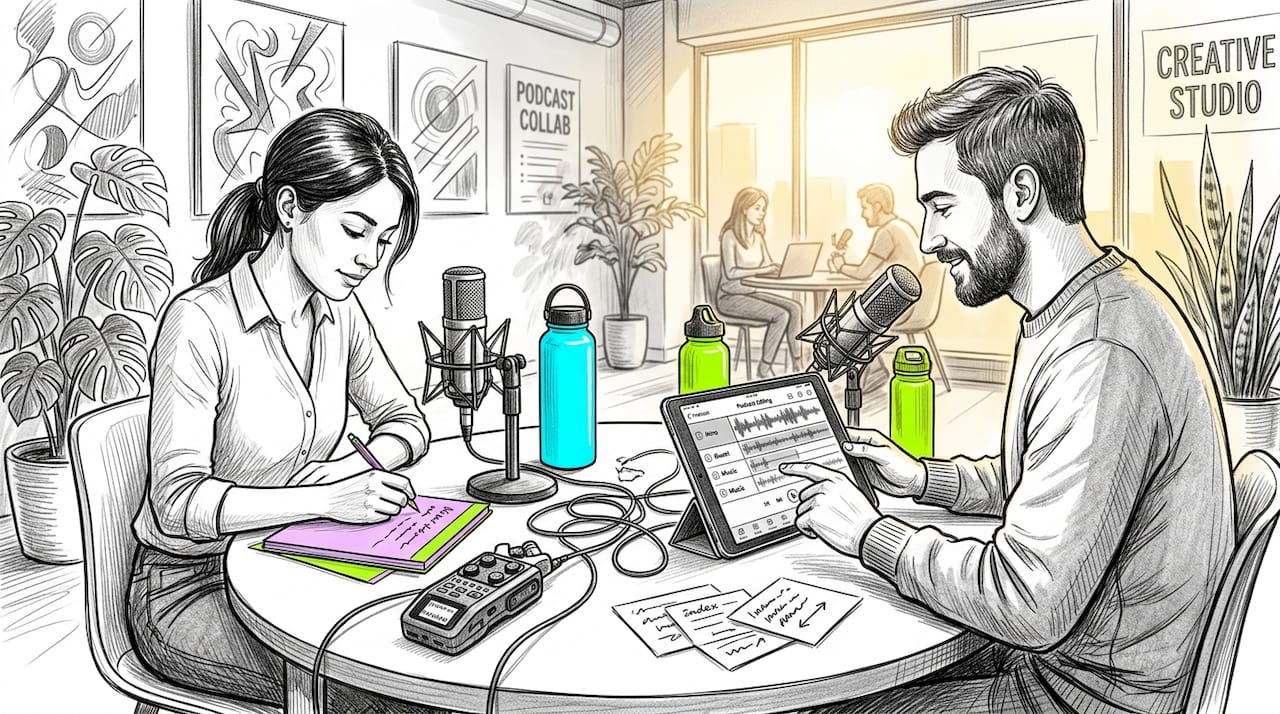
Braiding means weaving together different audio textures and segment types so the listening experience never feels monotonous. Think of a single-voice monologue as a flat line on a graph. Braiding adds peaks and valleys. Your listener’s attention stays active because the format keeps shifting.
Here’s what braiding can look like in practice:
- Host intro or solo narrative segment to establish context and set the episode’s tone
- Vox pops (short clips of real people sharing opinions or experiences) to add authenticity and varied voices
- Interview or guest dialogue to introduce contrast and depth
- Narrative bridges where the host ties segments together and carries the thread forward
- Music or sound effects to signal transitions and create a sonic identity unique to your brand
Braiding scene tape, narrative transitions, and interviews is a proven production technique that supports listener engagement by constantly refreshing the audio experience. The key is variety without chaos. Every element should feel like it belongs.
Here’s a simple comparison of episode structure approaches to help you see the difference:
| Approach | Pacing | Listener experience | Retention potential |
|---|---|---|---|
| Single-format monologue | Flat | Predictable, passive | Low to moderate |
| Interview only | Moderate | Dependent on guest energy | Moderate |
| Braided multi-format | Dynamic | Active, varied, engaging | High |
| Braided with sound design | Highly dynamic | Immersive and branded | Very high |
Use a content calendar to plan your braiding structure in advance. Decide which segments appear in which episodes, and rotate your formats deliberately rather than defaulting to whatever feels easiest that week.
Pro Tip: Record short ambient audio clips that are unique to your brand, whether it’s a signature music sting, a room tone, or a simple sound cue. Use these consistently as transition markers. Over time, they become part of your identity, and driving podcast engagement becomes easier when your listeners recognize you by sound alone.
Seamless product mentions: Making sponsors part of the story
Now that your format is varied and paced, seamlessly weaving in sponsor or product mentions can actually heighten engagement rather than interrupt it. The difference between a product mention that feels authentic and one that makes your listener reach for the skip button comes down to one thing: narrative purpose.
Traditional ad-reads feel like a pause in the story. Narrative integrations feel like a natural part of it. Let’s break down what that looks like in practice.
| Format | How it sounds | Listener reaction | Trust impact |
|---|---|---|---|
| Traditional ad-read | “This episode is brought to you by…” | Signals interruption, skip reflex | Neutral to negative |
| Host endorsement | Personal story about using the product | Relatable, feels genuine | Positive |
| Narrative integration | Product woven into the episode’s topic | Seamless, adds value | Strongly positive |
| Segment-labeled placement | “Here’s our tools corner…” | Clear boundaries, trusted cue | Positive |
Product-forward segments work best when they have clear boundaries and a consistent narrative reason for being there. Listeners aren’t opposed to hearing about products. They’re opposed to feeling tricked or talked at.
Here’s a quick checklist for planning product mentions that serve your story arc:
- Does the product connect naturally to the episode’s theme?
- Have you shared a personal experience or specific use case with the product?
- Is the placement clearly labeled so listeners know what it is?
- Does the mention add information or value, not just a sales pitch?
- Are you being transparent about the sponsorship relationship?
On the ethical side, always disclose sponsored content clearly. The FTC requires disclosure, and your audience’s trust is worth far more than any single deal. Never misrepresent your experience with a product. If you haven’t used it, say so or don’t take the deal.
Explore podcast sponsorship opportunities to understand what brands are looking for, and check out podcast marketing strategies that align with what audiences actually want to hear. Strong podcast commerce strategies are built on trust first and revenue second.
Using curiosity and mystery to drive retention
While narrative integration is key, keeping listeners guessing is the secret ingredient for retention. Open loops, which are questions or situations left deliberately unresolved, are one of the most powerful tools in any storyteller’s kit. And they work just as well in podcasting as in television or literature.
The psychology here is simple. When the brain encounters an unresolved question, it wants an answer. That desire keeps people listening past the segment break, past the sponsor mention, and all the way to the end of the episode.
Here’s how to build curiosity into your episode structure:
- Plant a question early and answer it late. Introduce an unresolved situation or claim at the top of the episode. Tease it again mid-episode. Resolve it at the end. This structure keeps listeners moving forward.
- Use end-of-segment teasers. Before every break or transition, preview what’s coming next in a way that creates anticipation. “After the break, we’re looking at the one tool that showed up in more entrepreneur podcast mentions than any other this quarter. You probably haven’t heard of it yet.”
- Create embedded puzzles. Invite listeners to form their own opinion before you share yours. “Think about what you’d do in this situation. We’ll tell you what our guest said in a minute.” This triggers active thinking rather than passive listening.
- Host an unresolved debate. Two hosts or guests disagree, and the episode ends without a clear winner. Invite listener feedback to continue the conversation. This drives community engagement beyond the episode itself.
“Plan for listener attention constraints and reinforce value with curiosity structures that keep your audience wanting what comes next.”
To craft a curiosity-driven episode outline, start with your resolution. What’s the satisfying answer, reveal, or conclusion you want your listener to walk away with? Then build backward. What questions lead to that resolution? Where can you delay the payoff without frustrating the audience? Map those beats before you record.
Collecting listener feedback on which mystery structures land best is just as important as using them. Run polls, ask in your community, or look at your analytics to see where listeners are still tuned in and where they drop off. Data-driven podcast discovery tools can help you identify patterns you wouldn’t notice just by listening back to your own episodes.
What most podcasters miss: Strategic content curation builds loyalty
Here’s an uncomfortable truth that most podcasting guides skip right past: tactics alone won’t save a poorly curated show. You can have the snappiest hook format, the most dynamic braiding structure, and the most authentic product integrations in your category. If the overall content strategy lacks deliberate curation, the show eventually plateaus.
What does curation actually mean here? It means making intentional choices about which ideas, guests, products, and topics earn a spot in your episodes based on what your specific audience cares about, not just what’s trending broadly. It means evolving your content strategy over time using listener feedback and analytics rather than repeating what worked once until it stops working.
We’ve seen this pattern play out repeatedly. A show launches with a clear angle and tight format. Growth is strong. Then, chasing volume, the host starts recording whatever comes to mind. The back catalog grows but the identity blurs. New listeners can’t figure out what the show is about. Retention drops.
The shows that avoid this pattern treat their content like a curated collection rather than a continuous stream. They ask: does this episode belong in our catalog? Does it serve the listener who found us through our best work? Does it strengthen or dilute our brand?
Advanced podcast curation tactics are what separate shows that grow consistently from shows that spike and fade. Investing up front in structure, planning, and audience alignment pays off as your back catalog becomes one of your most powerful discovery tools. A new listener who finds episode 47 should be able to trust that episode 12 is just as good.
The future of podcasting isn’t ad saturation. It’s narrative-rich content that earns audience trust and makes sponsor integrations feel like recommendations from a friend. That’s the shift worth making.
Level up your podcast engagement with Prodcast
You now have a full toolkit for crafting episodes that hook listeners early, hold attention with dynamic structure, integrate products authentically, and keep curiosity alive from start to finish. The next step is finding the right insights to fuel that strategy.

Prodcast is built exactly for this. It analyzes podcast transcripts across thousands of shows to surface which products, tools, and moments are genuinely resonating with audiences right now. Want to know which books are being repeatedly recommended on business podcasts this month? Or which AI tools are trending in tech shows? Prodcast has the data. Browse Podcast Moments to discover the specific clips and mentions that are driving real listener engagement. Or explore something like Mass Persuasion to see how top podcasters structure their most compelling content. Your next great episode idea is already out there in the conversation.
Frequently asked questions
What makes a podcast hook effective?
An effective podcast hook quickly establishes intrigue or context, making listeners want to stay past the first minute. The best hooks introduce a mystery or concept early so the listener immediately understands what they stand to gain.
How can I integrate sponsorships without losing audience trust?
Integrate product mentions as clearly defined segments with genuine narrative purpose, not just ad breaks. Podcast sponsors are most effective when included with narrative context and consistent segment cues that listeners recognize over time.
Why use mystery or curiosity in episode planning?
Mystery and curiosity structures maintain listener attention and reduce early drop-off by keeping the brain actively engaged. Curiosity structures reinforce value and give listeners a reason to stick around all the way to the end.
What is content “braiding” in podcasts?
Braiding means layering sound elements, narrative, and different voices to vary pacing and sonic texture throughout an episode. Braiding transitions and interviews supports sustained engagement by preventing the flat listening experience that comes from a single-format approach.
How often should I change my episode structure?
Regularly revisit your structure using listener feedback and analytics to remain innovative and engaging. There’s no fixed schedule, but a good rule of thumb is to evaluate your format at least once per quarter and adjust based on where your audience is actually dropping off.