CATEGORIES
TAGS
Leverage podcast ecommerce trends: 76% of listeners buy

Podcast host recommendations aren’t just influential, they’re conversion machines. A staggering 76% of podcast listeners purchase products endorsed by their favorite hosts, outperforming traditional digital advertising channels by significant margins. Yet many marketers still underestimate the ecommerce power of podcast placements, allocating budgets to saturated platforms while overlooking this high-intent audience. This article reveals which products top podcasters recommend, how host-read ads drive measurable sales lift, and the strategic measurement tactics you need to capitalize on podcast ecommerce trends in 2026.
Table of Contents
- Key takeaways
- How podcast ads and host recommendations power ecommerce sales
- Top ecommerce products and tools recommended by podcasters
- Mechanics and measurement strategies behind successful podcast ecommerce campaigns
- Strategic approaches for brands to leverage podcast ecommerce trends in 2026
- Explore Prodcast’s tools to amplify podcast ecommerce success
- Frequently asked questions
Key Takeaways
| Point | Details |
|---|---|
| High purchase intent | Listeners are 76% more likely to purchase products endorsed by their favorite podcast hosts. |
| Authentic host endorsements | Host read ads create trust and a parasocial bond that makes listeners feel informed rather than advertised. |
| Graza results | Graza achieved a 15% retail lift and 3x incremental sales through campaigns combining host endorsements with geo targeted measurement. |
| Niche podcasts ROI | Niche focused podcasts outperform broad programmatic ads for ecommerce return on investment. |
| AI powered launches | AI powered supplement creation tools enable rapid product launches featured in ecommerce podcasts. |
How podcast ads and host recommendations power ecommerce sales
Host-read podcast ads create a trust dynamic that traditional display or social ads struggle to replicate. When a podcast creator personally endorses a product, listeners perceive it as a genuine recommendation from someone they’ve built a parasocial relationship with over dozens of episodes. This authenticity translates directly into purchasing behavior, with data showing listeners are 54% more likely to buy brands advertised on podcasts compared to other digital channels.
The numbers back up this effectiveness in concrete terms. Graza, an olive oil brand, achieved a 15% retail lift and 3X incremental sales through targeted podcast campaigns that combined host endorsements with geo-targeted measurement. These results weren’t flukes or outliers. They represent the predictable outcome of aligning authentic storytelling with high-intent audiences who trust their podcast hosts’ judgment on product quality.
Consider the typical listener journey. Someone hears their favorite business podcast host explain how a specific tool solved a real problem in their workflow. That endorsement carries weight because the host has demonstrated expertise over months or years of content. The listener doesn’t feel advertised to, they feel informed by a trusted advisor.
Key factors driving podcast ad effectiveness:
- Personal connection between host and audience creates receptivity to recommendations
- Long-form format allows detailed product explanations beyond 15-second spots
- Contextual relevance when products align with podcast themes and listener interests
- Repeated exposure across multiple episodes reinforces brand awareness without feeling repetitive
“Podcast advertising works because it’s not interruption marketing. It’s invitation marketing. Listeners actively choose to consume this content, creating a receptive mindset that traditional ads can’t manufacture.” - Industry insight from audio advertising research
This effectiveness explains why brands are shifting budgets toward podcast advertising strategies that prioritize host relationships over programmatic scale. The math is simple: a smaller audience with 76% purchase intent beats a massive audience with single-digit conversion rates. Smart marketers recognize that podcast listeners represent a premium segment, people who actively seek out expertise and are willing to invest in recommended solutions.
Top ecommerce products and tools recommended by podcasters
Ecommerce podcasters consistently spotlight specific product categories that resonate with their entrepreneurial audiences. Supplements dominate health and wellness shows, with LMNT electrolytes appearing across fitness and biohacking podcasts as hosts share personal hydration routines. Apparel brands like Ugmonk gain traction through mentions on design and minimalism podcasts, where aesthetic quality and brand story matter as much as the products themselves.
The rise of AI-powered supplement creation tools has accelerated product launches featured on ecommerce podcasts. Entrepreneurs can now develop and market supplements in weeks rather than months, allowing them to capitalize on trending ingredients and formulations discussed across podcast networks. This speed-to-market advantage creates opportunities for first-movers who listen closely to podcast conversations about emerging health trends.

Beyond physical products, ecommerce tools form a second major category of podcast recommendations. Shopify remains the dominant storefront platform mentioned across business podcasts, with hosts sharing specific apps and integrations that enhance their stores. Klaviyo earns frequent mentions for email marketing automation, particularly when podcasters discuss customer retention strategies. Descript has become the audio editing tool of choice among podcast creators who also run ecommerce businesses, creating natural cross-promotion opportunities.
Most mentioned ecommerce product categories:
- Supplements and health products with clear differentiation stories
- Direct-to-consumer apparel emphasizing quality and brand values
- Digital tools and SaaS platforms solving specific ecommerce pain points
- Books and courses from podcast guests promoting their expertise
| Product Category | Example Brands | Podcast Marketing Impact |
|---|---|---|
| Supplements | LMNT electrolytes, AI-formulated products | High repeat purchase rates, strong affiliate performance |
| Apparel | Ugmonk, niche DTC brands | Brand loyalty through storytelling, premium positioning |
| Ecommerce Tools | Shopify, Klaviyo, Descript | B2B conversions, long customer lifetime value |
| Digital Products | Courses, templates, books | Low fulfillment costs, immediate delivery |
Pro Tip: Align your product launch timing with relevant podcast content calendars. If health podcasts discuss New Year fitness goals in December and January, pitch your supplement for November episodes to capture that planning phase audience.
The pattern across these recommendations reveals a crucial insight: podcasters don’t just mention products, they explain why those products matter in their specific context. A host doesn’t simply say “I use Shopify.” They share how Shopify’s abandoned cart recovery feature saved a product launch, or how a specific app integration solved a fulfillment headache. This contextual depth transforms product mentions into case studies that educate while they sell.
Understanding which products gain traction helps marketers identify dynamic podcast advertising opportunities in their category. If competing products appear frequently on target podcasts, that signals an audience receptive to your solution. If your category is underrepresented, you’ve found a whitespace opportunity to become the go-to brand through strategic partnerships.
Mechanics and measurement strategies behind successful podcast ecommerce campaigns
Successful podcast ecommerce campaigns rely on three core mechanics that separate high performers from wasted ad spend. Host-read ads provide the authenticity foundation, but the real sophistication lies in how brands structure attribution and measurement to prove ROI.
Geo-targeted lift studies have emerged as the gold standard for measuring podcast campaign impact. These studies divide markets into test and control groups, running podcast ads only in test markets while monitoring sales across both groups. The difference in sales lift between test and control markets, adjusted for baseline trends, reveals the true incremental impact of podcast advertising. Graza’s 15% retail lift came from precisely this methodology, providing irrefutable evidence of campaign effectiveness.
Custom landing pages enable granular tracking of podcast-generated traffic and conversions. Smart marketers create unique URLs for each podcast or even each episode, allowing them to measure which shows drive the highest quality traffic. These pages often include podcast-specific offers or messaging that reinforces the host’s endorsement, creating continuity between the audio ad and the digital experience.
Essential measurement components for podcast campaigns:
- Unique promo codes or URLs for each podcast partnership to track direct attribution
- Geo-targeted lift studies comparing test markets with podcast ads to control markets without
- Cross-platform attribution tools connecting podcast exposure to purchases across channels
- Custom landing pages with podcast-specific messaging and offers
- Retail sales tracking through partners like Circana to measure in-store lift
| Metric | Programmatic Ads | Host-Read Ads |
|---|---|---|
| Trust Score | 2.3/5 | 4.7/5 |
| Purchase Intent | 12% | 54% |
| Brand Recall | 31% | 78% |
| Cost Per Acquisition | $45 | $38 |
The attribution challenge remains significant because podcast listening happens across devices and platforms, while purchases may occur days or weeks later through different channels. This delayed, cross-device journey requires sophisticated measurement tools that connect podcast exposure to eventual purchases. Pixel-based tracking, panel data, and survey methodologies all play roles in building a complete attribution picture.
Pro Tip: Implement a multi-touch attribution model that assigns partial credit to podcast touchpoints rather than relying solely on last-click attribution, which systematically undervalues podcast’s role in the customer journey.
Host-read ads consistently outperform programmatic alternatives because they leverage the host’s credibility and speaking style. A host naturally weaves product benefits into their narrative, using personal anecdotes and authentic enthusiasm that scripted ads can’t replicate. This authenticity drives the 54% higher purchase likelihood that makes host-read placements worth their premium pricing.
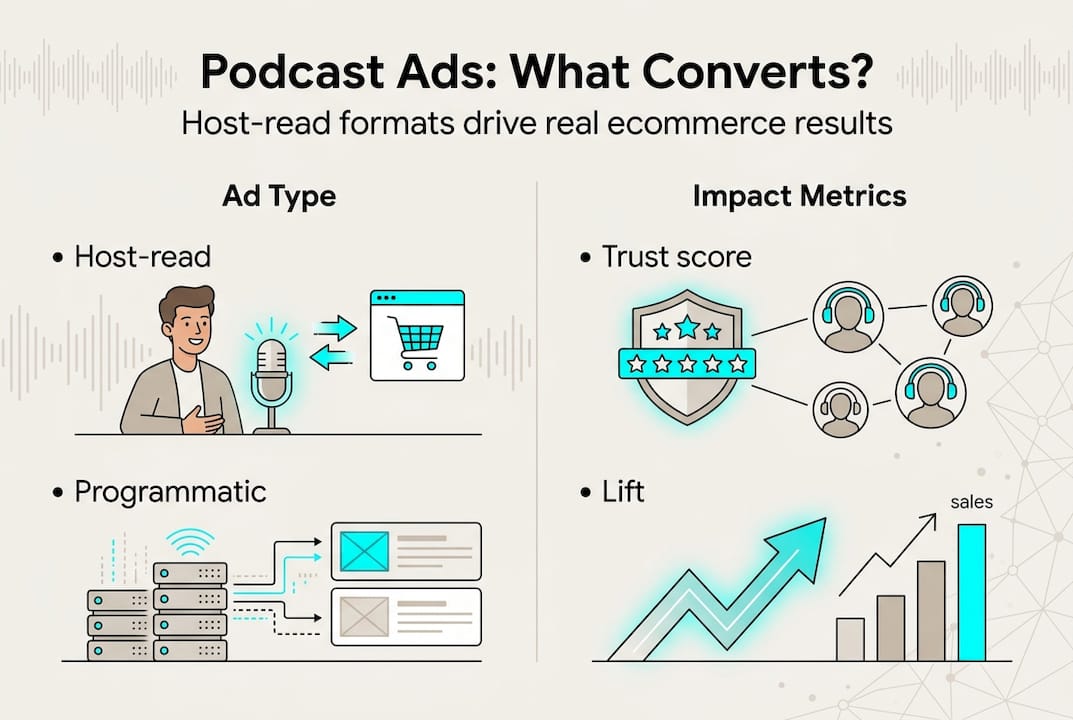
The data table above illustrates why savvy marketers prioritize host-read formats despite higher upfront costs. The superior trust scores and purchase intent translate into lower customer acquisition costs and higher lifetime value. When you factor in the brand-building benefits of association with respected podcast hosts, the ROI case becomes even more compelling.
Brands that master these mechanics gain a sustainable competitive advantage. They understand that podcast programmatic advertising serves a different purpose than host-read partnerships, using programmatic for broad awareness while reserving host-read spots for conversion-focused campaigns. This strategic allocation maximizes the strengths of each format.
Strategic approaches for brands to leverage podcast ecommerce trends in 2026
The most effective podcast ecommerce strategy starts with ruthless podcast selection. Broad reach matters less than audience alignment. A niche podcast with 10,000 highly engaged listeners in your exact target demographic will outperform a general interest show with 100,000 loosely connected subscribers. Look for podcasts where the host’s values, expertise, and audience demographics map precisely to your ideal customer profile.
Host endorsement authenticity determines campaign success more than any other variable. Listeners can detect when a host genuinely uses and believes in a product versus reading a script for a paycheck. The best partnerships emerge when podcast creators already use your product or express interest in your category. This natural fit allows hosts to share authentic experiences rather than manufactured testimonials.
Strategic priorities for 2026 podcast campaigns:
- Prioritize niche podcasts with highly engaged audiences over broad shows with passive listeners
- Verify host-product alignment before partnerships to ensure authentic endorsements
- Implement comprehensive measurement combining lift studies, custom URLs, and cross-platform tracking
- Avoid generic programmatic ads lacking host involvement or contextual relevance
- Build long-term partnerships rather than one-off sponsorships for sustained impact
Lift studies and cross-platform tracking provide the measurement rigor that justifies podcast budgets to finance teams. As podcast sponsorship forecasts predict continued growth, brands that can prove ROI through sophisticated measurement will secure larger allocations. This measurement sophistication separates experimental podcast dabbling from strategic channel investment.
The temptation to rely on programmatic podcast ads for scale undermines effectiveness when those ads lack authentic host involvement. Programmatic has its place for awareness campaigns, but conversion-focused ecommerce campaigns demand the trust and credibility that only host-read ads provide. Brands that understand this distinction allocate budgets accordingly, using programmatic strategies for top-of-funnel awareness while reserving host-read partnerships for driving sales.
Pro Tip: Cultivate long-term partnerships with podcast hosts by offering exclusive products, early access, or revenue sharing arrangements that align incentives and deepen the host’s commitment to your brand’s success.
Long-term partnerships compound effectiveness over time as hosts integrate your product into multiple episodes, creating repeated exposure without listener fatigue. A host who genuinely loves your product will mention it organically across episodes, generating far more value than a contracted six-episode sponsorship. These ongoing relationships also provide feedback loops, with hosts sharing listener questions and reactions that inform product development.
The founder-listener fit concept extends beyond demographics to psychographics and values. A sustainability-focused podcast audience will respond enthusiastically to brands with genuine environmental commitments but will reject greenwashing attempts. A productivity podcast audience wants tools that demonstrably save time, not vague promises of efficiency. Matching your brand’s core values and proven benefits to podcast audience priorities creates the resonance that drives conversions.
Brands entering podcast advertising in 2026 should start with a test-and-learn approach across three to five carefully selected podcasts. Measure results rigorously, identify which shows drive the strongest ROI, and then scale investment into winners while cutting underperformers. This disciplined approach builds confidence and expertise while minimizing wasted spend on misaligned partnerships.
Explore Prodcast’s tools to amplify podcast ecommerce success
Ready to discover which products are trending across thousands of ecommerce podcasts right now? Prodcast transforms podcast conversations into actionable intelligence, helping you identify emerging products, track competitor mentions, and find the perfect podcasts for your brand partnerships. Our AI analyzes transcripts to surface the exact moments when hosts recommend products, giving you the insights you need to make smart advertising decisions.

Explore our extensive library of podcast moments to see which products gain the most authentic endorsements across industries. Dive into featured products like Mass Persuasion to learn proven techniques that drive listener action. Check out exclusive clips from top automotive brands to understand how major companies leverage podcast content. Prodcast gives you the competitive intelligence to identify opportunities before your competitors do, turning podcast listening into strategic advantage.
Frequently asked questions
What are the top products recommended by ecommerce podcasters?
Ecommerce podcasters consistently recommend supplements like LMNT electrolytes, apparel brands like Ugmonk, and essential tools including Shopify for storefronts and Klaviyo for email marketing. AI-powered platforms now enable rapid supplement launches that podcasters feature, creating opportunities for entrepreneurs to capitalize on trending ingredients and formulations discussed across podcast networks.
How do host-read podcast ads differ from programmatic ads in ecommerce?
Host-read ads deliver personalized endorsements that leverage the trust and credibility hosts have built with their audiences, driving significantly higher purchase intent and conversion rates. Programmatic ads offer scale and efficiency but require geo-targeted lift studies and sophisticated attribution to measure their impact accurately, as they lack the authentic voice and contextual integration that make host-read spots so effective.
What measurement methods should brands use for podcast ecommerce campaigns?
Brands should combine geo-targeted lift studies that compare test and control markets, custom landing pages with unique URLs for each podcast partnership, and cross-platform attribution tools that connect podcast exposure to purchases across channels. This holistic measurement approach captures both direct response conversions and broader retail lift, providing the complete ROI picture that justifies continued podcast investment and helps optimize future campaign strategies.
Why do niche podcasts outperform broad shows for ecommerce conversions?
Niche podcasts attract highly engaged audiences with specific interests and pain points that align closely with targeted product solutions, creating natural receptivity to relevant recommendations. These focused communities trust their podcast hosts as category experts, making endorsements more credible and actionable compared to broad-audience shows where product relevance varies widely across listeners.
How can brands build authentic partnerships with podcast hosts?
Start by identifying hosts who already use products in your category or express genuine interest in the problems your product solves, ensuring natural alignment rather than forced sponsorships. Offer exclusive access, early product samples, or revenue sharing arrangements that give hosts real stake in your success, then allow creative freedom for hosts to integrate your product authentically into their content rather than demanding scripted talking points.