CATEGORIES
TAGS
Audio content trends in 2026: what listeners and marketers need
TL;DR:
- Audio content like podcasts is experiencing rapid growth, driven by technology, culture, and human behavior.
- Listeners now engage across multiple devices and prefer participatory formats like live interactions and clips.
- Brands should authentically integrate into audio storytelling through host-read ads and community-driven content.
Everyone keeps saying video is winning. And sure, video is everywhere. But here’s what’s actually happening beneath the surface: audio content consumption has seen explosive growth in the last three years, quietly reshaping how people learn, shop, and connect with brands. Podcasts, audio newsletters, and on-demand listening are pulling in audiences that are more loyal, more engaged, and more likely to act on what they hear. If you’re a listener, a marketer, or a brand trying to figure out where attention is actually going, this one’s for you.
Table of Contents
- What’s driving the audio content boom?
- How are listeners consuming audio content in 2026?
- Emerging formats and creative audio experiences
- What these trends mean for marketers and brands
- Perspective: The real future of audio content is participation, not just consumption
- Discover podcast moments and connect with engaged listeners
- Frequently asked questions
Key Takeaways
| Point | Details |
|---|---|
| Audio content growth | Smart tech and changing habits are driving rapid audio content adoption. |
| Listener behavior shifts | People are consuming audio across more platforms, balancing short clips and long episodes. |
| Emerging formats | New formats like interactive audio clips and live podcasts are changing engagement. |
| Marketing impact | Brands must authentically integrate into audio stories to reach engaged listeners. |
| Future is participation | The next big trend is listeners shaping content, not just consuming it. |
What’s driving the audio content boom?
So why is audio surging while everyone’s busy debating YouTube versus TikTok? The answer isn’t one thing. It’s a combination of tech, culture, and plain old human behavior.
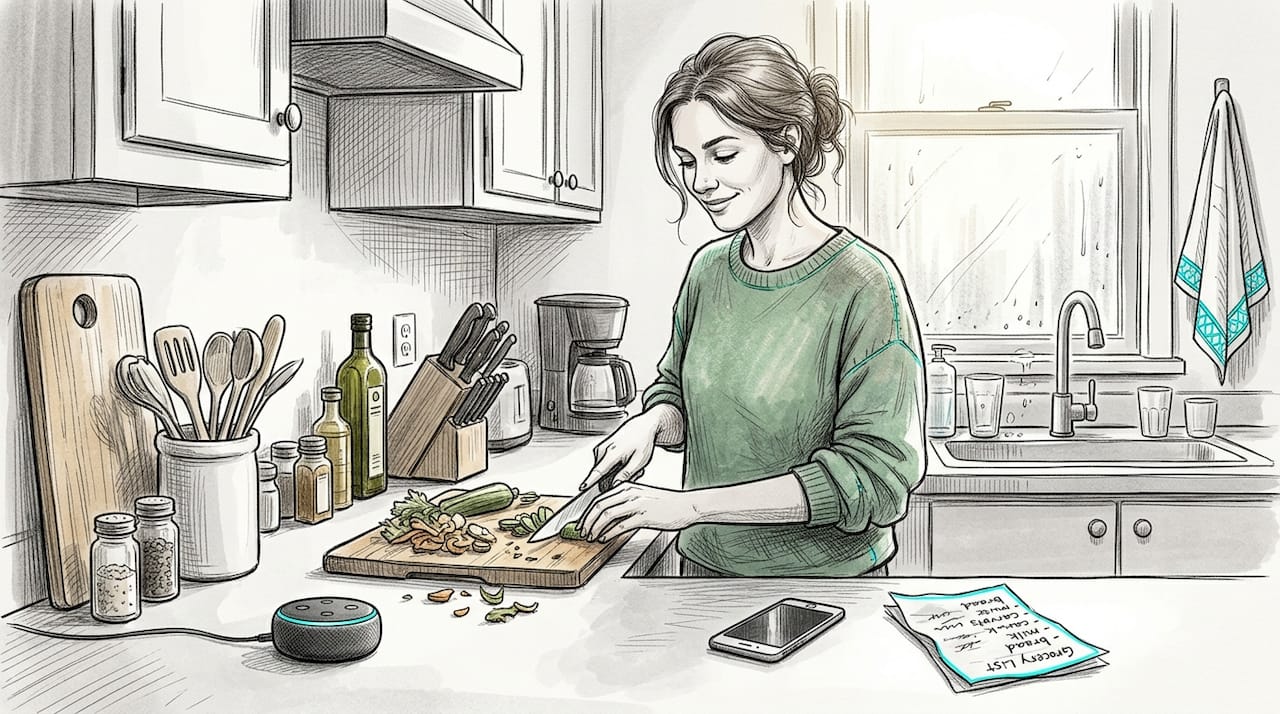
First, the hardware story. Mobile accessibility and smart speaker adoption are two of the major drivers pushing audio into more moments of everyday life. You can’t watch a video while driving or folding laundry. But you can absolutely listen to a podcast. Smart speakers sit in kitchens and living rooms, ready to play content on command. Connected cars have turned commutes into listening sessions. The friction is gone.
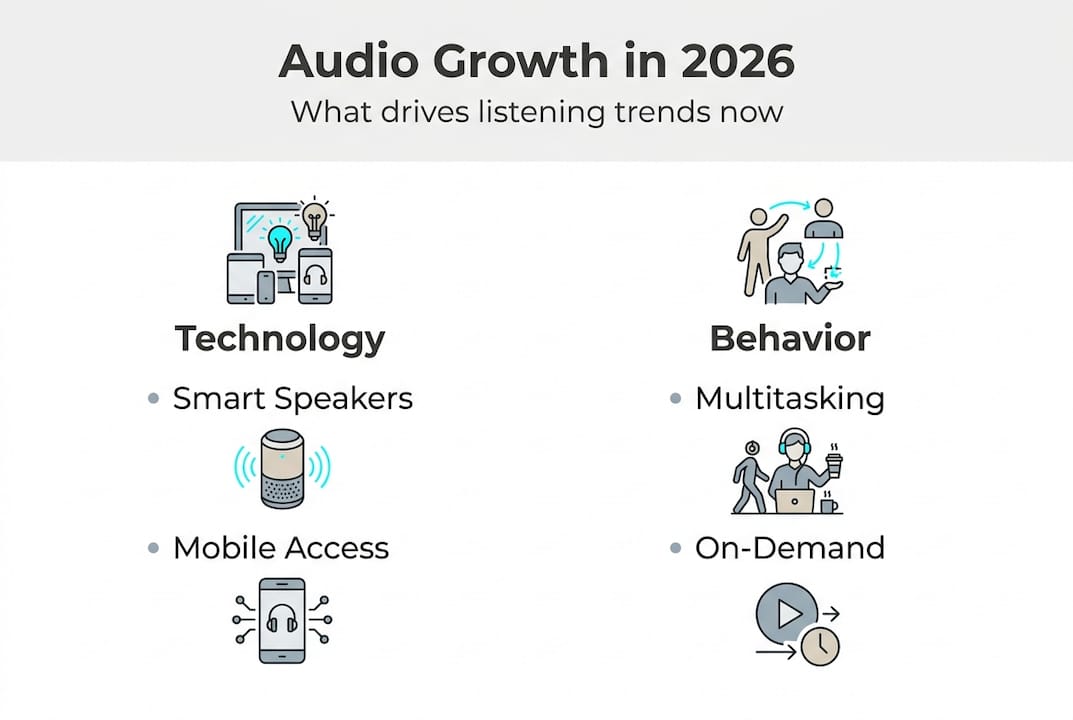
Second, there’s the multitasking culture angle. People are busier than ever, and audio fits into the gaps. It’s the format that doesn’t demand your eyes. That’s a genuine competitive advantage over video, not a weakness.
Third, platforms are investing heavily in exclusive audio content. Spotify, Apple, Amazon, and a wave of independent networks are funding original shows, locking in creators, and building ecosystems that keep listeners coming back. The recording technology evolution has also made production accessible to almost anyone with a decent mic and a story to tell.
Here’s a quick look at what’s fueling growth across key categories:
| Driver | Impact on audio growth |
|---|---|
| Smart speaker adoption | Expands listening to home and ambient moments |
| Mobile app improvements | Frictionless on-demand access anywhere |
| Connected car integration | Converts commute time into content time |
| Exclusive platform content | Builds loyal, returning audiences |
| Creator accessibility | More voices, more niches, more choice |
The podcast listener demographics tell an interesting story too. Audio is no longer just for early adopters or tech-savvy millennials. It’s spreading across age groups, income levels, and interests. That’s a big deal for brands trying to reach specific audiences.
Some of the standout behavioral shifts driving adoption:
- Listening during commutes, workouts, and household chores
- Subscribing to niche shows rather than browsing broadly
- Sharing episodes and clips with friends and colleagues
- Using audio as a primary source for news and learning
- Discovering products and services through trusted creator recommendations
Pro Tip: Brands that make their content easily accessible via smart devices and popular podcast apps widen their audience without spending more on production. Optimize your audio presence for the platforms where your audience already listens.
How are listeners consuming audio content in 2026?
With the backbone tech and trends established, let’s look at how people are actually experiencing audio in 2026. The short answer: it’s more varied than ever, and the habits are getting more sophisticated.
Podcast app engagement remains strong while on-demand audio content extends to more devices. People aren’t just listening on their phones anymore. They’re picking up where they left off on a smart speaker, then switching back to earbuds at the gym. Cross-platform consumption is the norm now.
Here’s how mainstream and niche platforms stack up for listeners:
| Platform type | Strengths | Listener preference |
|---|---|---|
| Mainstream apps (Spotify, Apple) | Huge catalogs, algorithm-driven discovery | Casual and frequent listeners |
| Niche podcast apps | Community features, curated content | Dedicated fans and enthusiasts |
| Smart speakers | Ambient, hands-free listening | Home-based and multitasking listeners |
| Smartphones | Portability, offline downloads | Commuters and on-the-go users |
The top five listener habits shaping podcast content trends right now:
- Playlisting: Listeners are curating their own audio queues, mixing episodes from multiple shows into a single session.
- Clipping moments: Saving or sharing specific segments that hit differently, whether it’s a product recommendation or a surprising insight.
- Pausing and resuming: Audio fits into fragmented schedules. People stop, start, and return without losing the thread.
- Cross-platform consumption: Starting on one device and finishing on another is completely standard behavior.
- Community sharing: Sending episodes to friends or posting clips on social media is becoming a primary discovery channel.
Short-form audio is growing fast. Daily news digests, five-minute briefings, and highlight clips are pulling in listeners who don’t have an hour to spare. But here’s the thing: long-form podcasts aren’t dying. Loyal fans of specific shows still show up for 90-minute deep dives. The listener demographics show that both formats are thriving, just for different moments and moods.
The key insight? Listeners are in control. They decide when, where, and how much they consume. That’s a shift brands and marketers need to respect.
Emerging formats and creative audio experiences
Once we’ve spotted where and how people listen, the next big piece is what they’re listening to and how formats are changing. And honestly, this is where things get exciting.
Short-form clips and interactive episodes are fueling new consumption patterns that didn’t exist just a few years ago. Creators are no longer just recording long conversations and uploading them. They’re building experiences.
Here’s what’s gaining momentum:
- Micro-content and highlights: Creators are pulling the best moments from full episodes and releasing them as standalone clips. These travel well on social platforms and bring new listeners into the full show.
- Live and semi-live audio rooms: Think live podcast recordings with real-time audience interaction. Listeners can drop questions, react, and feel like part of the conversation rather than just observers.
- Hybrid scripted and unscripted formats: Some of the most compelling shows blend tight narrative scripting with spontaneous conversation. It’s the best of both worlds, polished but human.
- Interactive Q&A episodes: Hosts pull listener questions directly into the episode. It creates a feedback loop that keeps audiences invested week after week.
- Experimental storytelling: Audio drama, immersive sound design, and narrative nonfiction are carving out passionate fanbases who treat podcast listening like an event.
“Interactive audio is turning passive listeners into active fans.”
That shift matters more than it sounds. When a listener feels like they’re part of a show, they don’t just consume it. They advocate for it. They share it. They show up every week. That’s the kind of loyalty that growing podcast audiences are built on, and it’s something no algorithm can fully replicate.
For brands paying attention, these formats create natural entry points. A sponsored live Q&A feels very different from a pre-roll ad. A branded clip that actually helps someone is worth more than a 30-second interruption.
What these trends mean for marketers and brands
Examining new creative approaches makes it essential to consider how brands and marketers should adapt. Because the opportunity here is real, but only if you approach it right.
Brands see podcasts as an intimate channel for high-value consumer engagement. That intimacy is the whole point. When a host recommends a product mid-conversation, it lands differently than a banner ad. The listener trusts the host. That trust transfers.
Four practical ways to embed your brand in audio content effectively:
- Targeted host-read ads: Work with hosts whose audience matches your customer profile. A host-read ad in their own voice, woven naturally into the episode, consistently outperforms produced spots.
- Sponsored moments: Rather than interrupting content, sponsor a specific segment. A “sponsored by” fitness tip or a branded book recommendation feels like added value, not an ad.
- Branded mini-series: Commission a short podcast series around a topic your audience cares about. It builds authority and keeps your brand in the feed for weeks.
- Creator and influencer partnerships: Partner with podcast hosts as ongoing brand advocates, not one-off ad placements. Repeated mentions build recall far more effectively than a single campaign.
Measuring success in audio looks a bit different than in digital display. Focus on listener retention rates, brand recall surveys, and direct response metrics like promo code redemptions or unique landing page visits. These tell you whether the message actually landed.
For data-driven podcast growth, the brands winning right now are the ones treating audio like a relationship channel, not a broadcast channel.
Pro Tip: The best results come from integrating your brand into storylines authentically. If it sounds like an ad, listeners tune out. If it sounds like a genuine recommendation, they write it down.
Perspective: The real future of audio content is participation, not just consumption
Here’s a take you won’t hear from most industry analysts: the obsession with download numbers is already outdated.
Everyone tracks audience size. Bigger numbers, more reach, better ad rates. That logic made sense when podcasting was a passive medium. But audio is evolving into something more participatory, and the brands and creators who recognize that early will have a serious edge.
The real shift is happening in interactive formats where listeners shape the show. Real-time Q&A, community-driven episode topics, listener polls that actually influence content direction. These aren’t gimmicks. They’re the beginning of a feedback loop that turns casual listeners into genuine advocates.
When someone feels like they helped create something, they don’t just listen. They defend it, share it, and bring their friends. That’s advocacy, not just reach. And advocacy is worth ten times the download count.
For brands, this means the smartest investment isn’t in the biggest show. It’s in the most engaged community. Growing podcast communities built around genuine participation are where the next wave of loyal customers is forming. The question isn’t how many people heard your ad. It’s how many people felt something.
Discover podcast moments and connect with engaged listeners
If this article got you thinking about how much is happening inside audio content right now, you’re not wrong. There’s a lot to track, and the good stuff moves fast.

That’s exactly why Prodcast exists. We analyze podcast transcripts to surface the moments that matter: product mentions, expert recommendations, trending topics, and the nuggets that make listeners pause the episode. You can discover podcast moments across thousands of shows, or dig into specific episodes like the mass persuasion episode to see what’s resonating with real audiences. Whether you’re a curious listener or a brand looking to connect with engaged communities, explore Prodcast and see what the conversations are actually saying.
Frequently asked questions
How has podcast consumption changed in recent years?
Podcast app engagement remains strong while on-demand audio extends to more devices, with listeners now embracing both long-form deep dives and quick snackable clips depending on their mood and schedule.
What technologies are influencing audio content trends?
Smart speakers and mobile accessibility are the leading drivers, alongside car-connectivity features that turn everyday commutes into consistent listening sessions.
How can brands or marketers successfully reach audio audiences?
Brands succeed by integrating authentically into audio storytelling through host-read ads and sponsored moments, rather than relying on interruptive formats that listeners quickly tune out.
Are short-form or long-form podcasts more popular in 2026?
Short-form clips are rising fast as a discovery tool, but dedicated listeners still show up consistently for long-form episodes that go deep on topics they care about.
What is a podcast moment and why does it matter?
A podcast moment is a shareable highlight or memorable clip pulled from a full episode, and it matters because it’s often the first thing a new listener encounters before deciding to follow a show.